Posted with Permission from Brandon Crawford
➡️ Canada
➡️ United States
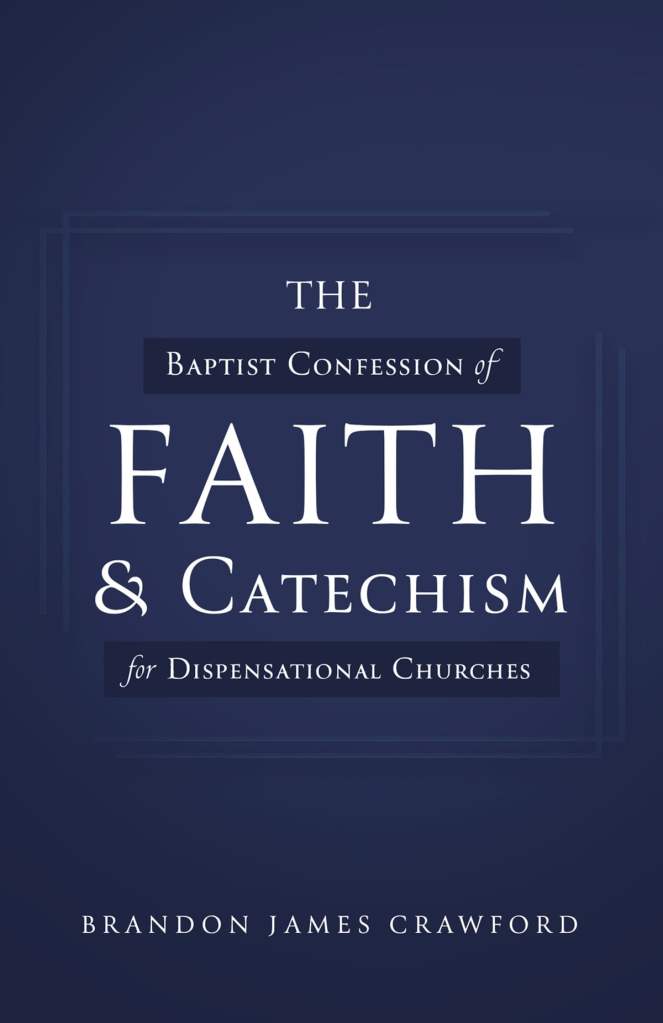
Introduction to The Baptist Confession of Faith
In 1677, Baptist pastors Nehemiah Coxe and William Collins drew up a confession of faith for the Petty France Church in London. The confession was approved by the congregation and soon distributed to other Baptist churches in Great Britain, where it was enthusiastically received. Twelve years later, in 1689, representatives of more than one hundred Baptist churches meeting in general assembly formally adopted the second edition as their doctrinal standard.
The Baptist Confession of Faith (also known as the Second London Baptist Confession) has since become the most important summary of Baptist teachings in the English-speaking world. Not long after its adoption in Great Britain, it crossed the Atlantic and became the standard for Baptist churches throughout the American colonies. In the North it was called the Philadelphia Confession, and in the South, the Charleston Confession. Today, it is used by Baptist churches all over the globe.
The authors drew most of the language for The Baptist Confession directly from the Westminster Confession of the Presbyterians, with some supplemental material coming from the Savoy Declaration of the Congregationalists. In a few places, especially where the authors needed to outline Baptist distinctives, their wording was original.
The Baptist Confession is more than just a “statement of faith.” It is a fully-orbed system of doctrine that has stood the test of time. This new edition retains the timeless language of the original with just a few minor alterations to bring its teachings into line with an originalist hermeneutic.
“Be not ashamed of your faith,” Charles Spurgeon once wrote. “Remember it is the ancient gospel of martyrs, confessors, reformers and saints. Above all, it is the truth of God, against which the gates of Hell cannot prevail.”
Brandon Crawford
Marshall, Michigan
Table of Contents
➼ Chapter 1: The Holy Scriptures
➼ Chapter 5: Divine Providence
➼ Chapter 8: Christ the Mediator
➼ Chapter 10: Effectual Calling
➼ Chapter 15: Repentance unto Life and Salvation
➼ Chapter 17: The Perseverance of the Saints
➼ Chapter 18: The Assurance of Grace and Salvation
➼ Chapter 21: Christian Liberty and Liberty of Conscience
➼ Chapter 22: Religious Worship
➼ Chapter 23: Lawful Oaths and Vows
➼ Chapter 24: The Civil Magistrate
➼ Chapter 27: The Communion of the Saints
➼ Chapter 28: Baptism and the Lord’s Supper
➼ Chapter 30: The Lord’s Supper
➼ Chapter 31: The State of Man After Death
➼ Chapter 32: The Last Judgments
Pastors/Elders & Seminary Professors who affirm this confession of faith:
Brandon Crawford
Lead Pastor at First Baptist Church of Saint Johns, MI.
David Pitman
Pastor, Addyston Baptist Church, OH.
Jon Dingledine
Pastor, Lochwood Christian Fellowship, CO.
Mark Snoeberger
Professor of Systematic Theology and Apologetics
Detroit Baptist Theological Seminary, Allen Park, MI.
Michael Riley
Pastor, Calvary Baptist Church, Wakefield, MI.
Steven Thomas
Pastor, Huron Baptist Church, Flat Rock, MI.